
Luče becomes the second Slovenian town to be part of Mountaineering Villages/Bergsteigerdörfer
On September 28th, 2019, the Luče Municipality became part of the international network of Mountaineering Villages/Bergsteigerdörfer. Together with the Alpine Association of Slovenia, the town has undertaken to promote sustainable tourism based on outdoor activities in the mountains without excessive infrastructure, to act in an environmentally responsible manner, and to respect the cultural and natural heritage.

Luče - gnezdo sredi gora (foto Tomo Jeseničnik)
Mountaineering Villages (Bergsteigerdörfer)
is an international network of towns that strive to develop their
tourism based on the tradition of mountaineering, without excessive
infrastructure, and through a sustainable approach. The Mountaineering
Villages thereby fulfill all the aims of the Alpine Convention, which is
committed to sustainable development throughout the Alpine region. The
project is a joint effort of the alpine associations of Austria (ÖAV),
Germany (DAV), South Tyrol (AVS), Italy (CAI), and Slovenia (PZS). In
Slovenia, the Alpine Association of Slovenia is the coordinator of the
project, and they are helped by the Ministry of the Environment and
Spatial Planning, which is in charge of the implementation of the Alpine
Convention, and the Ministry of Economic Development and Technology.
Twenty-eight villages in Austria, Bavaria, South Tyrol, Italy, and
Slovenia are currently included. The first Slovenian village to be part
of the project was Jezersko in 2018 and a year later Luče became the second Slovenian town in this international network.
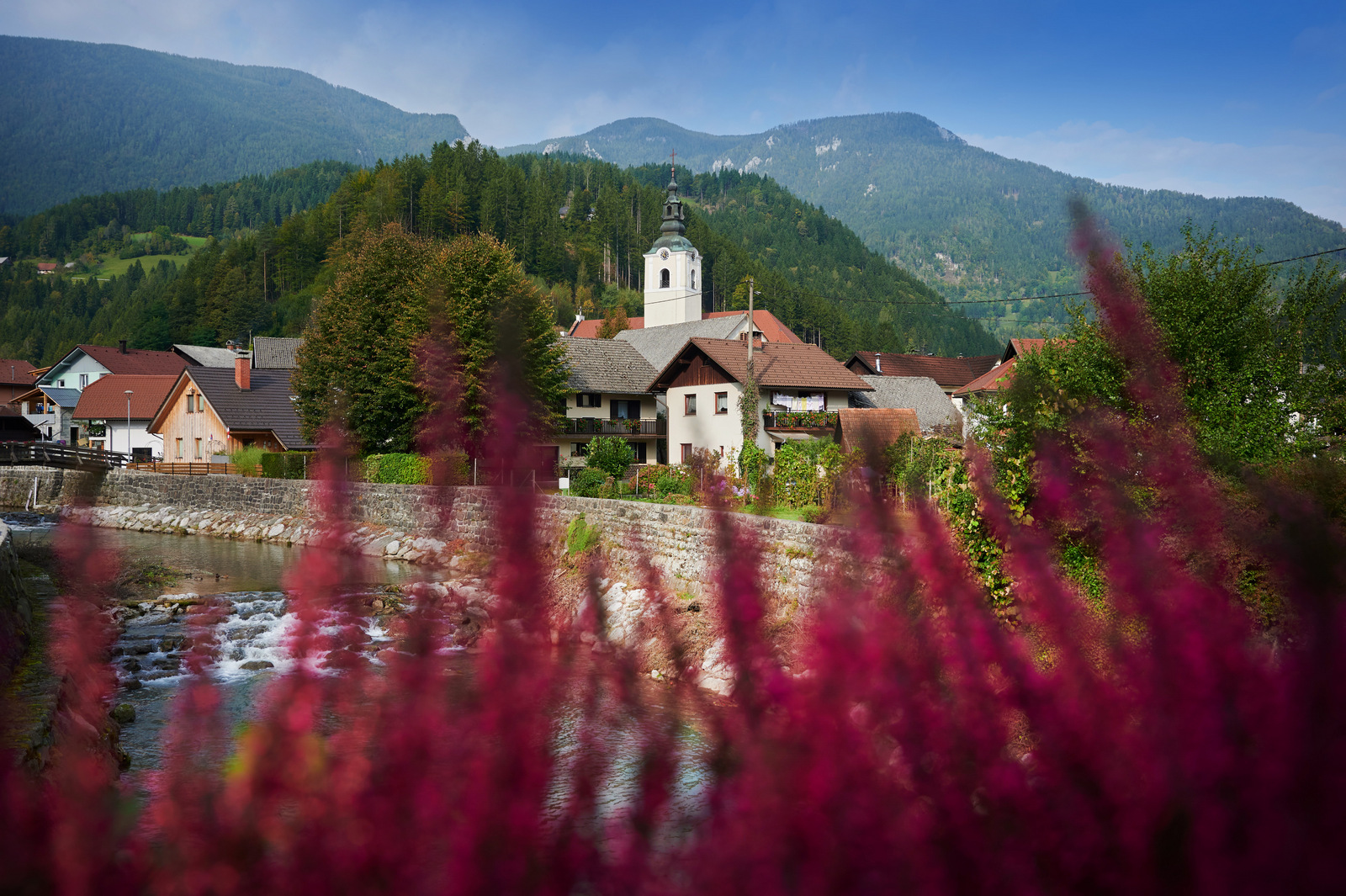
Luče becomes the second Slovenian town to be part of Mountaineering Villages/Bergsteigerdörfer (photo credit: Tomo Jeseničnik)
All the locations that are part of this network are small peaceful places surrounded by mountains. They have a rich mountaineering and cultural tradition, are environmentally responsible, and allow for numerous activities without excessive infrastructure. Their visitors can learn about the local history and cultural heritage and enjoy their hospitality and local cuisine, all of which makes this project a very positive influence on the development of the local economy which provides a strong incentive for the younger generations to plan a future in their home villages.
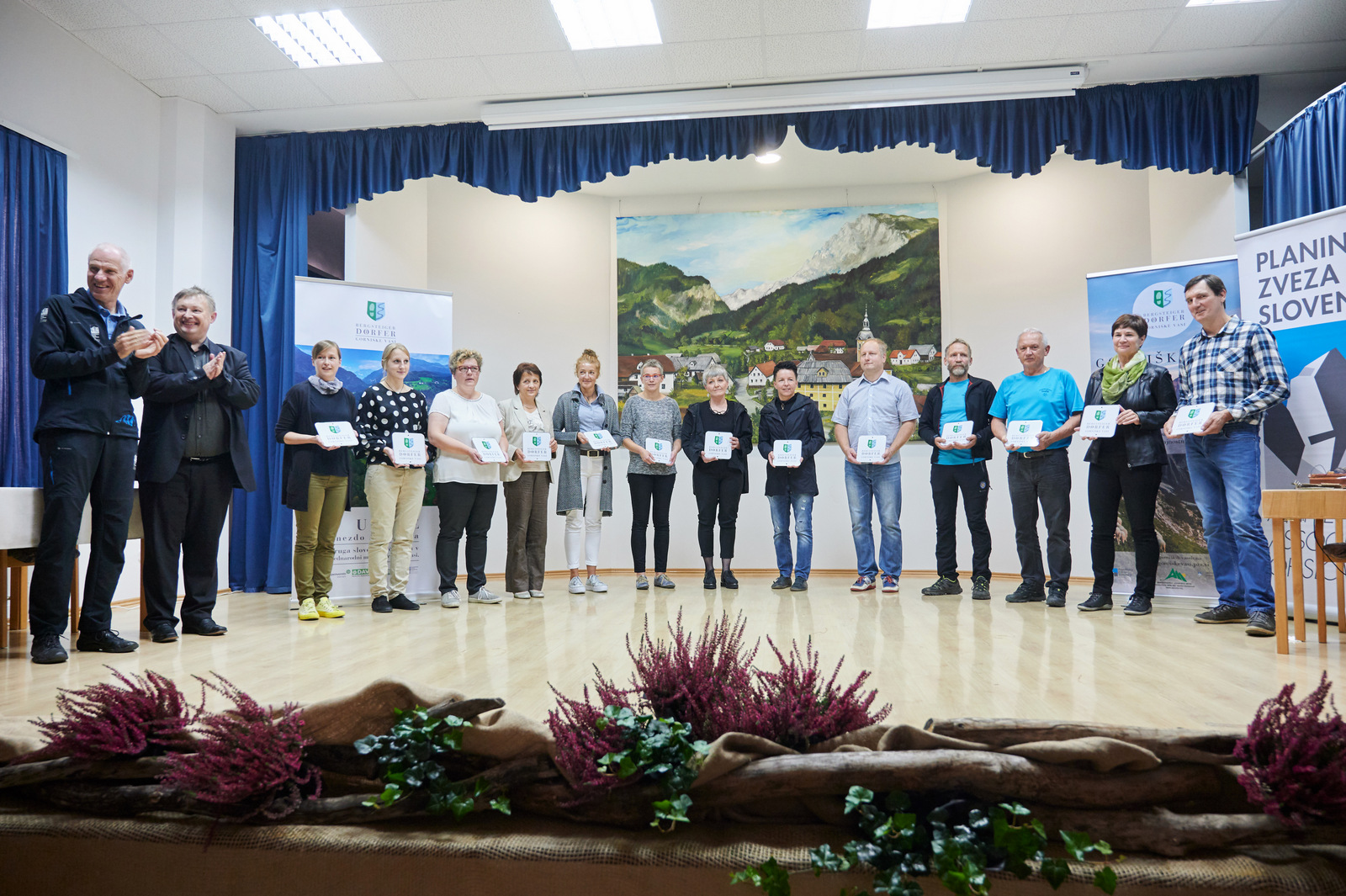
Tourism providers from Luče at the celebration with Jože Rovan, president of the Alpine Association of Slovenia, and Ciril Rosc, Mayor of the Luče Municipality (photo credit: Tomo Jeseničnik)
Luče is a typical alpine village at the confluence of the rivers Savinja and Lučnica in the upper part of the Savinja Valley. It is the centre of the eponymous municipality, nestled into nearly 110 square kilometres of hills and mountains of the eastern part of the Kamnik-Savinja Alps. Luče are an excellent starting point for hiking trips, mountain tours, and mountain biking. To the north of the village, mountaineers are drawn to the Raduha mountain which is one of the most frequently visited surrounding peaks. It is known for its diverse alpine vegetation and offers a sweeping vista due to its remote location. Several marked paths of different degrees of complexity lead to Raduha. In the winter, you can enjoy a beautiful experience in backcountry skiing from this peak with its 2,062 metres to the sunny Loka plane with its mountain hut. Into the south-western slope of the mountain Raduha is nestled the Snow Cave (Snežna jama), the highest tourist cave in Slovenia, situated at an altitude of 1,556 metres. The cave is known for the eternal ice found in the Ice Hall (Ledena dvorana) at the entrance of the cave, as well as for the large quantities of moon milk (malgonite) and a rich tapestry of speleothems. Experienced cavers will take you on a guided tour of the cave during the summer months.
On the west side of Luče, you can admire the Dleskovška planota, a highland Karstic plane stretching between the valleys of Lučka Bela, Podvolovljek and Robanov kot. Immediately after people settled into these places, they developed the activity of mountain grazing which has survived into the present. The plane is known for its easily accessible hilltops reaching up to 2,000 metres. Due to the many possibilities for skiing that Dleskovška planota has to offer, it is increasingly gaining popularity among backcountry skiers.
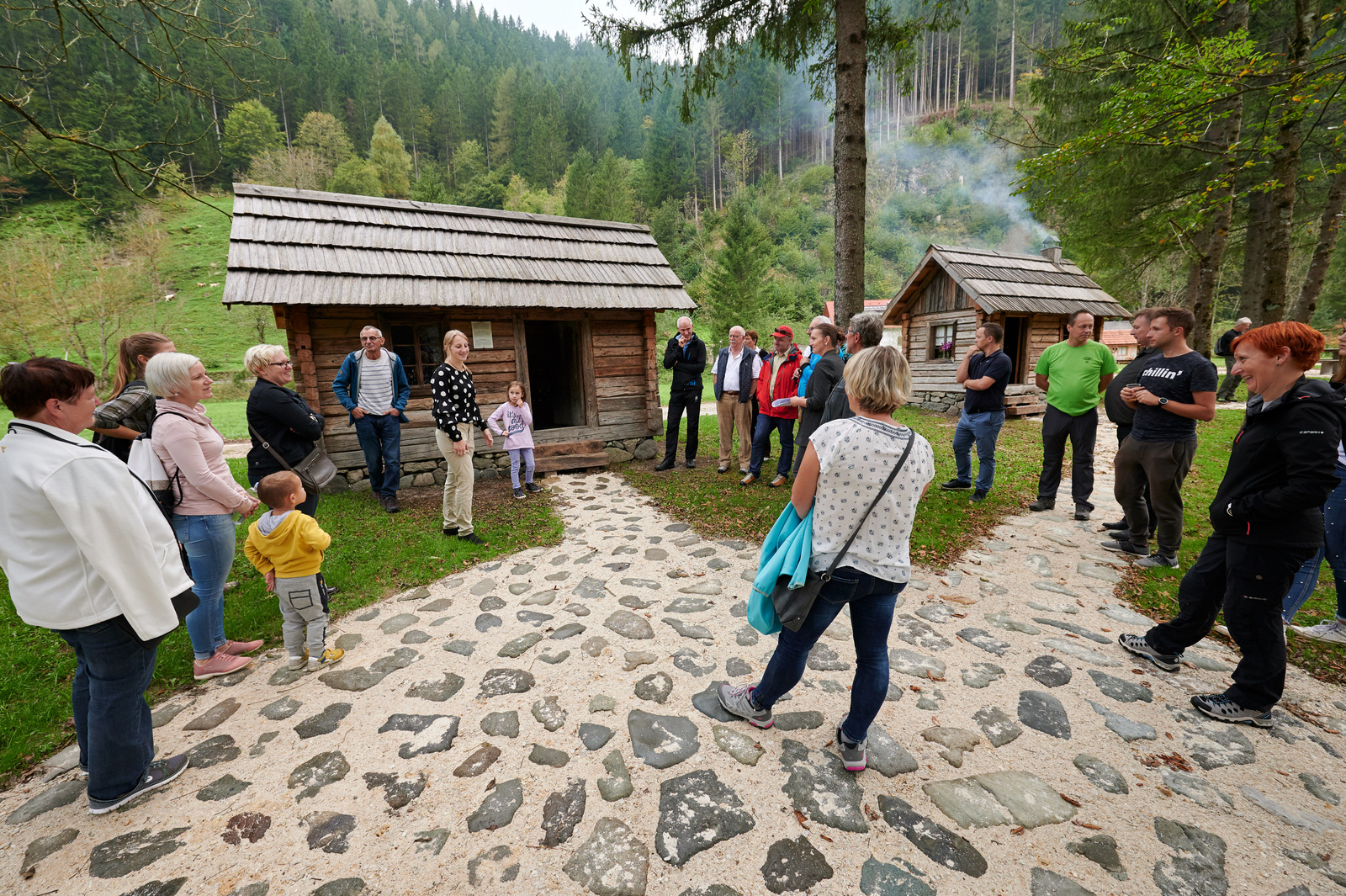
Visit of the outdoor museum in Luče along the Savinja River (photo credit: Tomo Jeseničnik)
The southern part of the Luče municipality is closed with a wooded mountain ridge and its tallest mountain Rogatec with its 1,557 metres. From this ridge, you can admire the most astonishing panoramic views of the entire ridge of the Kamnik-Savinja Alps. At the foothill of the Rogatec mountain, you will find an interesting three-tier waterfall called Cuc where it is also possible to go canyoning. In addition to numerous hiking trails, the immediate surroundings of the village also offer several easier walking routes and footpaths adapted to less experienced hikers. The rugged terrain, riddled with woodland tracks and dirt roads, is perfect for slightly more complex mountainbiking experiences.
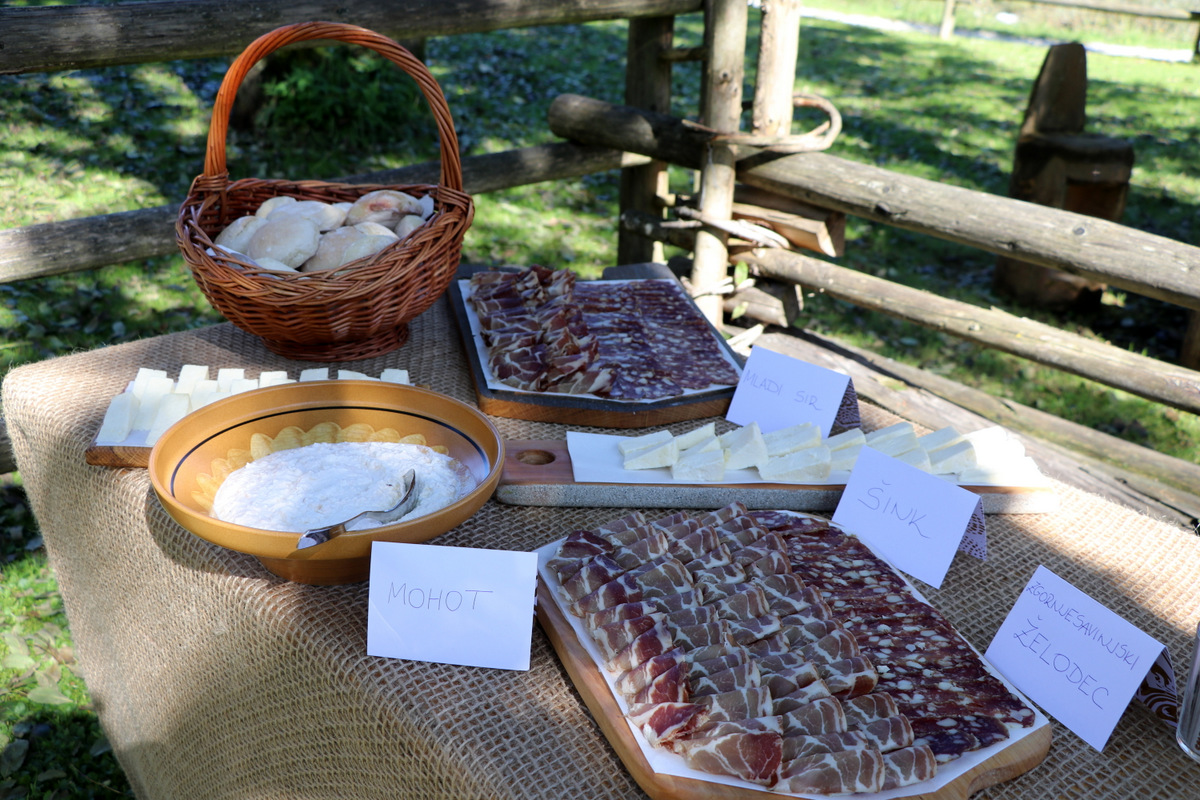
Local cuisine with the best known the Upper Savinja Valley stomach sausage with a protected geographical indication (photo credit: Manca Ogrin)
You can also enjoy numerous water experiences. The Savinja river is one of the most beautiful Slovenian rivers, mostly attractive for fans of fly-fishing. The extremely pronounced alpine character upstream of the river provides a perfect backdrop for rafting or kayaking, while simultaneously allowing you to cool off and take a swim during the summer. In favourable snow conditions, Luče offer you the possibility of different winter recreation activities. The highlands provide ideal conditions for winter hiking and backcountry skiing. In the valley, you can also enjoy skiing on a smaller piste with a ski tow, and even come back in the night to go night skiing. A shorter cross country skiing track is arranged next to the piste. In an interesting range of different accommodation possibilities, you are sure to find something for all tastes. An important part of the tourist offer is also the local cuisine, mainly based on homemade rustic dishes made from cereals and milk, as well as different charcuterie products, the best known of which is the Upper Savinja Valley stomach sausage with a protected geographical indication.
You are warmly welcome!